Darknet Markets 2026:
The dark web is part of the deep web but is built on darknets: overlay networks that sit on the internet but which can't be accessed without special tools or software like Tor. Tor is an anonymizing software tool that stands for The Onion Router — you can use the Tor network via Tor Browser.
| Darknet Market | Established | Total Listings | Link |
|---|---|---|---|
| TorZon Market | 2022 | 140+ | Onion Link |
| Nexus Market | 2024 | 600+ | Onion Link |
| Abacus Market | 2022 | 100+ | Onion Link |
| Ares | 2026 | 100+ | Onion Link |
| Cocorico | 2023 | 110+ | Onion Link |
Updated 2026-10-27
Finding Drugs on the Darknet is Simple
Accessing darknet drug links requires specialized software, primarily The Onion Router (Tor) browser. This tool directs internet traffic through a global, volunteer-run network of servers, encrypting the connection multiple times to conceal a user's location and activity. Standard search engines cannot index these darknet sites, which use .onion addresses. Therefore, users rely on dedicated link directories or forums where communities share and verify current, functional URLs to various marketplaces. The process is straightforward: obtain the Tor browser, find a reliable directory or forum through word-of-mouth or clearnet research, and use the provided .onion link to access the marketplace directly. This system ensures a high degree of initial anonymity and is the foundational step for engaging with these platforms.
Once inside a marketplace, the interface is often familiar, resembling conventional e-commerce sites. Navigation is designed for clarity, with substances categorized for efficient browsing.
Common categories include:
- Stimulants (e.g., amphetamines, cocaine)
- Psychedelics (e.g., LSD, psilocybin mushrooms)
- Pharmaceuticals (e.g., benzodiazepines, opioids)
- Cannabis and derivatives
- Precursors and chemicals for synthesis
How Encryption and Crypto Keep Darknet Shopping Safe
The foundation of secure shopping on the darknet is a dual-layer system of encryption and cryptocurrency. These technologies work in tandem to create a protected environment for transactions.
Encryption, primarily through tools like PGP (Pretty Good Privacy), secures all communication. When a buyer contacts a vendor, they use the vendor's public PGP key to scramble their address and order details. Only the vendor, with their private key, can decrypt this information. This means that even if a message is intercepted, the content remains unreadable. It ensures that personal data and shipping details are shared solely between the two parties involved.
Cryptocurrencies like Bitcoin and Monero provide the financial layer of protection. They enable pseudonymous payments by separating financial transactions from real-world identities. Unlike a bank transfer, a cryptocurrency payment does not inherently contain a user's name or home address.
For enhanced privacy, Monero is often preferred as it obfuscates transaction details on its blockchain, making the payment trail far more difficult to follow than with transparent cryptocurrencies.
The process integrates these elements seamlessly:
- A buyer encrypts their order and shipping information with the vendor's PGP key.
- The buyer sends the encrypted data and pays for the order using cryptocurrency, typically into a secured escrow account held by the market.
- The vendor decrypts the shipping information to fulfill the order while the funds are held safely until delivery is confirmed.
This model effectively shifts trust from individuals to technology. The system does not rely on the buyer or vendor knowing each other; it relies on the proven cryptographic security of the tools. Encryption guarantees private communication, and cryptocurrency enables a financial transaction that is not directly tied to a legal identity. This combination is what makes the darknet marketplace a functional and resilient model for discreet commerce.
How Darknet Markets Keep Your Purchases Private
The foundation of secure shopping on the darknet is the complete separation of a buyer's identity from their transaction. This is achieved through a multi-layered system of cryptographic tools and financial protocols. When a user accesses a marketplace, their connection is routed through the Tor network, which encrypts and bounces communications through several volunteer relays, effectively masking the user's original IP address.
The transaction itself is completed using cryptocurrencies like Bitcoin or Monero. These digital currencies operate on decentralized public ledgers, but do not inherently link wallet addresses to real-world identities. For enhanced privacy, users employ techniques such as:
- Using a new, unique wallet address for each transaction.
- Utilizing cryptocurrency "tumblers" or mixers to obfuscate the trail of funds.
- Opting for privacy-focused coins that hide transaction details by default.
This combination ensures that the financial aspect of the purchase is as anonymous as the network activity. The marketplace platform acts only as a facilitator, never possessing the buyer's personal information. The system is designed so that the only points of contact are the encrypted order details and the decentralized payment, creating a robust framework for discreet consumer activity.
How Reviews Build Trust for Drug Vendors on the Darknet
The foundation of a functional darknet marketplace is a robust reputation system. Unlike traditional commerce, these platforms operate without legal recourse, making community-driven feedback the primary mechanism for ensuring reliability. Every transaction concludes with a detailed review system where buyers rate vendors on specific criteria.
Key metrics in these reviews include:
- The precise quality and purity of the product received.
- The accuracy of the stealth and packaging methods used for shipping.
- The vendor's communication speed and professionalism.
- The overall shipping time from order to delivery.
This transparent accumulation of data creates a persistent vendor profile. High ratings and a long transaction history generate significant trust and visibility within the marketplace. New or unscrupulous vendors are quickly identified through negative feedback, which serves as a powerful self-regulating tool. The system effectively mirrors the trust mechanisms of surface web e-commerce, but with greater emphasis on operational security and product accuracy. For a buyer, consistently high ratings are the most reliable indicator of a successful transaction, reducing uncertainty and fostering a stable trading environment.
How Escrow Makes Darknet Purchases Safer
The escrow system is a fundamental security feature on darknet markets, directly addressing the inherent trust deficit between anonymous buyers and vendors. It functions as a neutral third-party holding service for cryptocurrency payments. When a purchase is made, the buyer's funds are held by the market's escrow service and are not immediately released to the seller. This mechanism creates a protected transaction window.
The funds are only disbursed to the vendor after the buyer confirms successful receipt and quality of the product. This process effectively aligns the interests of both parties: vendors are incentivized to ship products reliably and buyers are protected from fraudulent listings. If a dispute arises, such as non-delivery or a significant quality discrepancy, the buyer can open a formal case. Market moderators then review communication and evidence before adjudicating the release or refund of the escrowed funds. The operational steps are clear:
- Buyer places an order and payment is locked in escrow.
- Vendor ships the product, providing proof to the system.
- Buyer finalizes the order upon satisfaction, releasing funds.
- If issues occur, a dispute triggers moderator review.
This model significantly reduces financial risk for the consumer and fosters a more stable commercial environment. It transforms a potentially risky cash-on-delivery street transaction into a structured, accountable process. The reliability of escrow is a primary reason for the sustained operational resilience of these platforms, as it builds user confidence and encourages repeat economic activity. The escrow service, therefore, is not merely an added feature but the core transactional engine that enables secure and predictable commerce on the darknet.
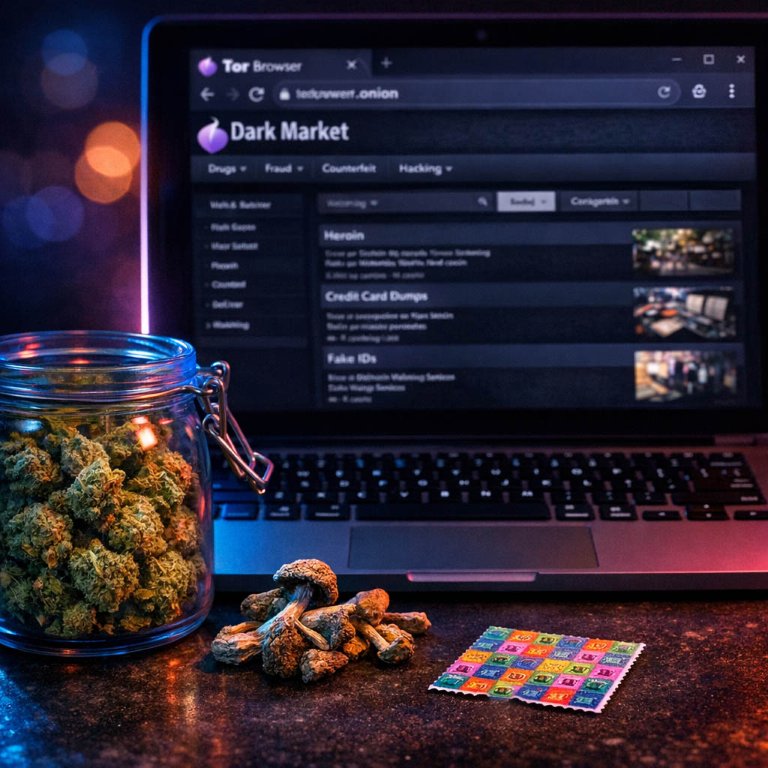
A Global Catalog of Substances on the Darknet
The darknet provides an unprecedented diversity of psychoactive substances, far exceeding the typical range available in localized street markets. This variety is a direct function of the platform's global reach and its operational model. Vendors from different regions list their products, creating a de facto global catalog where consumers can access substances that may be geographically unavailable or exceptionally rare in their own country.
The catalog is systematically organized, often featuring clear categories such as:
- Stimulants (e.g., amphetamines, cathinones)
- Psychedelics (e.g., LSD, psilocybin mushrooms)
- Dissociatives (e.g., ketamine, PCP analogs)
- Prescription medications (e.g., benzodiazepines, opioids)
- Chemicals for research purposes
Each listing includes detailed specifications, similar to a standard e-commerce product page. Information typically covers:
- Substance purity and laboratory test results
- Precise dosage information
- Country of origin and shipping methods
- Photographic evidence of the product
Why Darknet Markets Keep Thriving
The darknet market model demonstrates significant resilience, primarily due to its decentralized and adaptive architecture. Unlike traditional e-commerce, these platforms operate on a distributed network, making a single point of failure rare. When one marketplace is taken offline, its user base and vendors typically migrate to existing or newly established alternatives with minimal disruption. This hydra-like quality ensures continuous service availability, directly meeting persistent consumer demand.
This resilience is further reinforced by core operational principles:
- The use of cryptocurrency and end-to-end encryption creates a financial and communication layer that is difficult for external parties to intercept or trace.
- The escrow system and vendor rating mechanisms build a self-regulating economy of trust, reducing fraud and incentivizing high-quality service without third-party arbitration.
- The model's success is fundamentally driven by its ability to provide discretion, variety, and reliability, attributes highly valued by its user base. The system's design addresses the shortcomings of surface web commerce for these particular goods, creating a robust, self-sustaining ecosystem that evolves in response to both technical challenges and user feedback.

How the Darknet Delivers Discreetly
The demand for discretion is a primary driver for the use of darknet markets. Traditional procurement methods carry significant social and professional risks, including public exposure and damage to reputation. Darknet platforms address this by embedding privacy at every stage of the transaction.
The system is built on operational security. Buyers access markets through anonymizing networks like Tor or I2P, which mask their location and identity. Communication is secured with end-to-end encryption, ensuring that only the intended vendor can read the message content. The financial aspect is handled by cryptocurrencies such as Bitcoin or Monero, which provide a layer of separation from traditional, identity-linked banking systems. This creates a transaction where the physical exchange is entirely separate from the digital agreement.
Discretion extends to the packaging and delivery. Experienced vendors employ stealth techniques to make packages blend in with ordinary mail, using decoy items and vacuum sealing to prevent detection by scent or sight. This meticulous attention to logistical privacy means the product arrives without drawing attention, directly meeting the consumer's need for confidentiality and safety from social scrutiny.
How Darknet Markets Make Buying Easy and Safe
The operational model of darknet markets is engineered for user-centric efficiency. The process begins with straightforward access via specialized software, leading to a standardized interface where product listings are comprehensively categorized. This structure allows for efficient browsing and comparison, mirroring the functionality of conventional e-commerce platforms.
Transaction reliability is underpinned by a dual mechanism. Cryptocurrency payments are automatically held in escrow by the system until order fulfillment is confirmed. This financial safeguard is complemented by a transparent feedback and rating system, where past transaction data from other users provides a measurable metric for vendor trustworthiness. The integration of these features creates a self-regulating environment where consistent vendor performance is incentivized.
Logistical reliability is achieved through discreet packaging and shipping methods developed to protect the integrity of the shipment during transit. The entire cyclefrom search and evaluation to payment and fulfillmentfunctions as a cohesive system. This integrated approach reduces uncertainty and establishes a predictable framework for engagement, demonstrating how these platforms have institutionalized processes that prioritize consistent outcomes and user satisfaction.